Celebration Inspiration

Ideas for how cakes are styled for birthdays and gatherings.

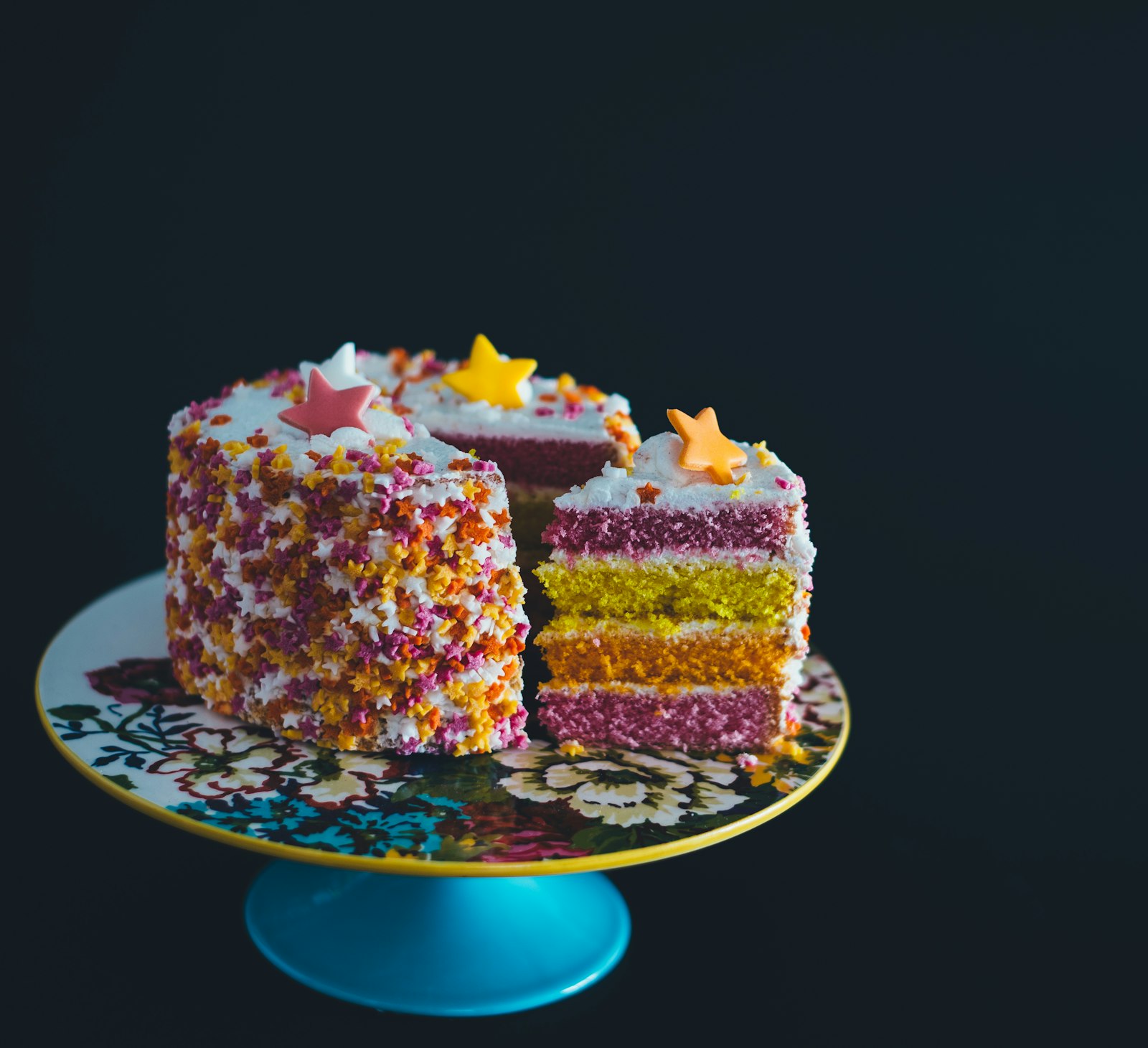
Beautifully presented celebration cake with colorful layers.
Celebration cake with colorful layers.

Birthday cake inspiration

Birthday cakes are often the most colorful cakes in a year. Height, a clear top surface for a message, and a crumb that slices cleanly for a group are the practical qualities. Flavor can be anything the gathering already likes: chocolate, vanilla, fruit or a mix.

Cakes for a shared table

A gathering cake is cut in public. That means the inside matters as much as the outside. A surprising filling is a pleasure only if the cake can be sliced without collapsing.

Wedding cake looks, as inspiration

Wedding cakes are often imagined in ivory, blush, soft green or white, with restrained piping or fresh botanical decoration. That visual language is widely recognized. It is described here only as a style people recognize.

Everyday sweet moments

Not every cake needs an occasion. A single slice, a cookie or a small tart can mark a Tuesday. The site treats those moments as part of the same craft.

Occasions, without a booking button

People look for celebration cakes when a date matters: a birthday, a small gathering, a table that needs a center. The useful qualities are practical. The cake should slice for the number of people in the room. The top should be calm enough for a message if a message is wanted. The decoration should survive the time between finishing and serving. Color can do a lot of the greeting before anyone reads the words.

The short notes and the longer notes both describe how celebration cakes are styled. Opening "Learn more" shows the longer note.

Sweet Elegance can still be asked a question. Call +65 9323 9161, email [email protected], or write to 637 Veerasamy Rd, #01-121, Singapore 200637. Say what you are asking. Do not include a card number. Opening hours are not on this page, so ask if your question depends on a visit. For the cake styles themselves, return to Our Cakes or the gallery.

A celebration cake is still a cake. Height and color do not replace a crumb that slices cleanly or a filling that stays in place when the first cut is made. Buttercream is common because it can be tinted and can sit at a cool room for the length of a gathering. A quieter finish, with the layers partly visible, suits a table that does not want much decoration. Both are discussed here as ways of looking, not as packages you can select and pay for on this site.

A cake that has to cross a room

A celebration cake is seen before it is tasted. It sits at a distance, on a table, and people understand from the height and the color that the day is marked. That first look is real, and it is not the whole cake. The knife still has to go through. The slices still have to reach the people at the edge of the group. A cake planned only for the photograph can disappoint the moment it is cut, if the layers slide or the frosting tastes like nothing but sugar.

Height comes from layers, not from a single deep pan that bakes unevenly. Even layers look calm and cook more predictably. Filling between them should be thick enough to taste and firm enough to hold when the cake is moved. A crumb coat, a thin first layer of frosting, traps loose crumbs so the final coat looks smooth. These are ordinary workshop habits. They are why a tall cake can still be eaten neatly.

Color, words and portion

Color does the greeting. A few shades that agree with each other look more intentional than every color available. Deep cocoa and cream. Blush and ivory. Berry tones with a green leaf. Piping can repeat one of those shades in a border so the eye has a place to rest. Words, if there are words, need a clear patch of frosting and a steady hand. A crowded top makes the message hard to read and the cake hard to cut.

Portion changes the style. A single tall cake is a shared act: someone cuts, someone passes, the inside is revealed. Cupcakes are individual from the start. Each person has a whole small cake, the decoration can be the same on every one, and there is no moment of slicing. Both belong at birthdays. The choice is about the table, not about which one is more serious. A sheet cake, lower and broader, feeds a crowd and keeps the decoration simple across a large surface.

The hours around the cake

Buttercream and a cool room are a reliable pair for a gathering. Ganache holds in warmth better than a soft whipped cream. Fresh fruit on top is beautiful and has a short life once it is cut and sitting out. Flowers used as decoration should be kept as decoration, chosen with care near food, and not treated as an ingredient. Candles, a knife, plates and a few napkins matter as much as the piping. The cake is the center, and the serving is what makes it a celebration rather than an object.

Sweet Elegance writes about these choices on this page and on Our Cakes. Photographs of celebration cakes are in the gallery. To talk to the patisserie, call +65 9323 9161 or email [email protected]. The address is 637 Veerasamy Rd, #01-121, Singapore 200637. Ask about timing if you plan to visit, because hours are not printed on the site.
After the candles

The minute after a celebration cake is cut is when it becomes food again. Slices reveal whether the layers were even and whether the filling was a pleasure or a surprise that did not fit the outside. Guests remember that minute. They also remember whether the cake was easy to serve, whether plates were ready, and whether the frosting survived the wait. Planning those ordinary things is part of celebration baking, as much as choosing a color.

Leftovers have a texture of their own. Buttercream firms in the refrigerator and softens again on the counter. Sponge dries at the cut face unless it is covered. Fruit toppings are best eaten soon. A plain butter cake often tastes excellent the next day. Thinking about the day after is a kind way to choose a style: a cake that only works for an hour is a different decision from a cake that still tastes kind at breakfast. The pages on classic cakes and chocolate cakes are there when you want to make that choice with more detail.

Music, light and the time of day change a cake as much as frosting does. A tall cake in a dim room reads as an event. The same cake in a bright afternoon kitchen reads as generosity. Cupcakes on a sideboard read as ease, something guests can take without waiting for a speech. None of these settings is described here as a service. They are ways of seeing why bakers change height and portion. When the picture in your mind is clear, the essays on buttercream, layers and color have somewhere to land.